
Introduction
In the previous article in this series, we focused on Asset and Expense accounts in the Odoo 19 Chart of Accounts. We explained why both normally carry a debit balance, how Odoo separates Balance Sheet assets from Profit & Loss expenses, and how account classification affects reporting.
This article continues from that foundation and completes the next major side of the Chart of Accounts: Liabilities, Equity, and Income. These account groups normally have a credit nature, but each serves a different purpose. Liabilities explain what the business owes, Equity represents the owners’ financial interest, and Income records the revenue earned through business activity.
1. Where Liability, Equity, and Income Fit in the Chart of Accounts
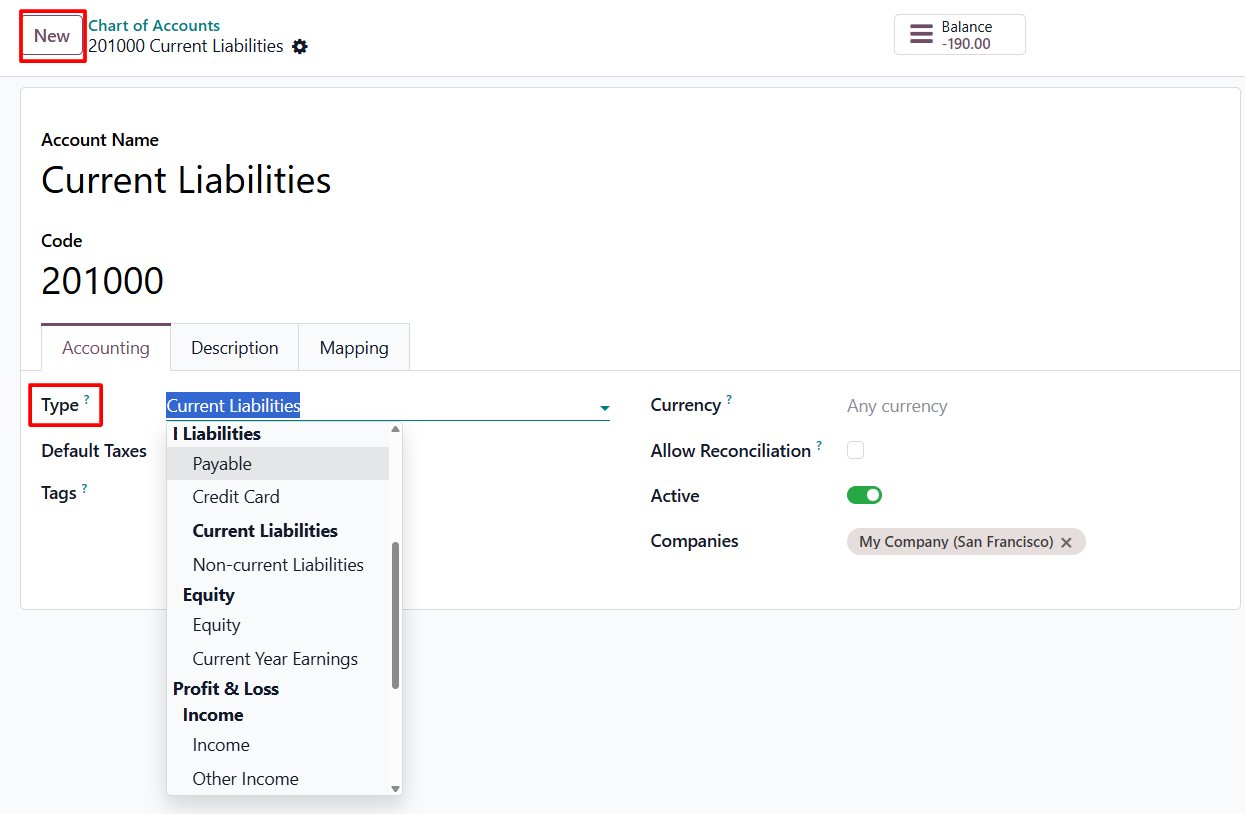
In Odoo 19, the Type field classifies an account according to its financial purpose. Liability and Equity types belong to the Balance Sheet structure, while Income and Other Income belong to the Profit & Loss structure.
This classification is important because Odoo uses Account Type for financial reporting and period-end accounting behaviour. A correct account name with the wrong Type can still place a balance in the wrong part of the financial statements.
2. Debit and Credit Nature of Liability, Equity, and Income
Liability, Equity, and Income accounts normally carry credit balances. In ordinary transactions, a credit increases these accounts and a debit reduces them.
|
Account group |
Increase |
Decrease |
Normal balance |
Primary report |
|
Liabilities |
Credit |
Debit |
Credit |
Balance Sheet |
|
Equity |
Credit |
Debit |
Credit |
Balance Sheet |
|
Income |
Credit |
Debit |
Credit |
Profit & Loss |
The debit or credit side does not indicate whether a transaction is good or bad. It simply shows how the selected account changes: Liability, Equity, and Income accounts normally increase with a credit and decrease with a debit.
3. Liability Accounts in Odoo 19
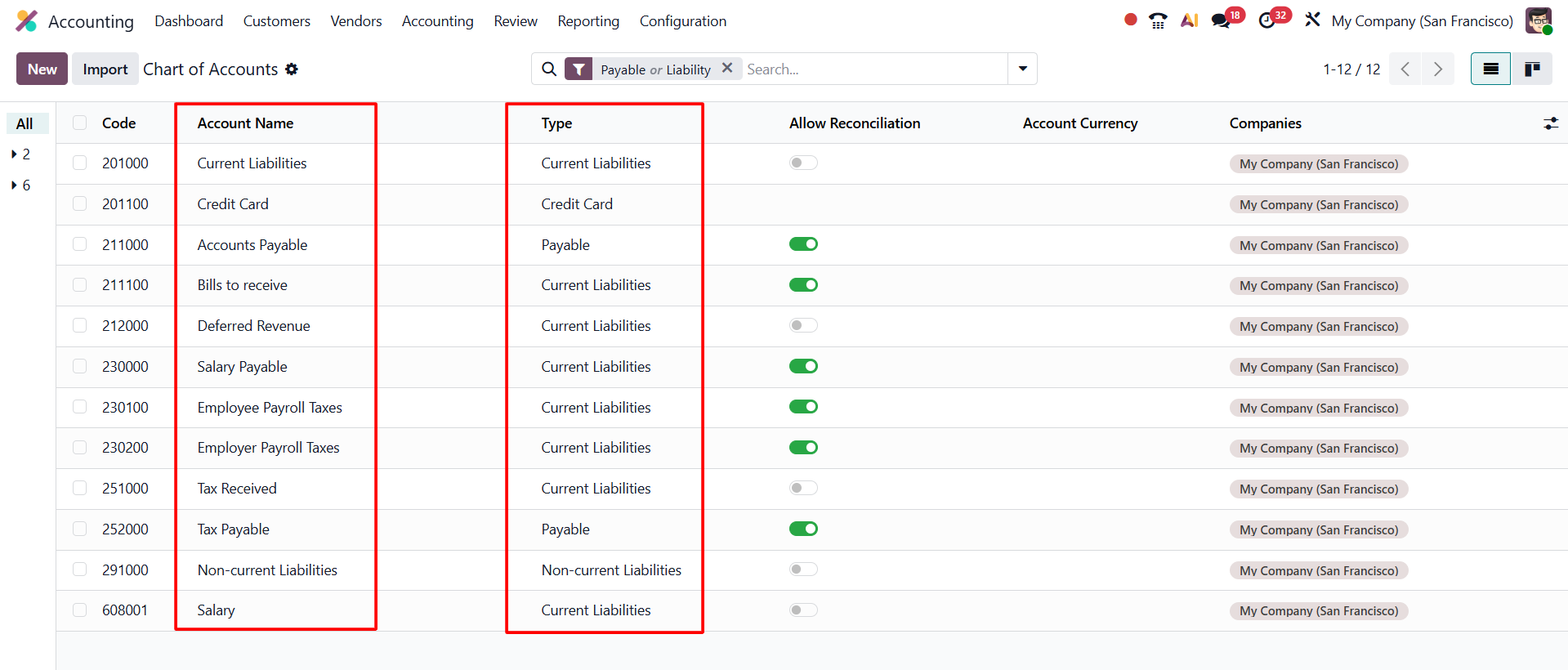
A liability represents an obligation the business owes to another party. In Odoo 19, liability account types help separate supplier balances, credit-card obligations, short-term liabilities, and longer-term obligations so they can be presented correctly on the Balance Sheet.
3.1 Payable
The Payable type is used for amounts owed to vendors. When a
vendor bill is posted, the amount due is normally credited to a payable
account. When the bill is settled, the payable is debited and reduced.
|
Account |
Debit |
Credit |
|
Office Supplies Expense |
$1,000 |
|
|
Accounts Payable |
$1,000 |
In this example, the vendor obligation increases on the credit side, while the related expense is recorded on the debit side.
|
Reporting impact Payable balances appear on the Balance Sheet as liabilities. They also feed the Aged Payable report, which helps finance teams review individual bills, credit notes, overpayments, due dates, and how long amounts have remained unpaid. The underlying journal items can also be reviewed in the General Ledger and Trial Balance. |
3.2 Credit Card
The Credit Card type is designed for company credit-card balances. In Odoo, a Credit Card Journal uses a Credit Card type account as its default journal account. Purchases or charges increase the amount owed, while repayments reduce the outstanding credit-card liability.
3.3 Current Liabilities
Current Liabilities are obligations expected to be settled in the short term under the company’s accounting policy. Typical examples include taxes payable, accrued expenses, short-term portions of loans, and other obligations due within the normal operating cycle.
Odoo also uses a Current Liability account for deferred revenue when revenue has been received or invoiced but should be recognised over future periods.
3.4 Non-current Liabilities
Non-current liabilities represent vital long-term financial obligations on a balance sheet that mature beyond one year, including instruments like multi-year bank loans, bonds payable, and deferred tax commitments.
Corporations strategically utilize these extended liabilities to fund major capital investments and business expansions securely without draining immediate cash reserves. By delaying principal repayments, organizations successfully preserve their near-term working capital and operational liquidity for daily business needs.
4. Equity Accounts in Odoo 19
Equity represents the owners’ or shareholders’ financial
interest in the business after liabilities are considered. Equity normally
carries a credit balance because owner contributions and accumulated profits
increase the owners’ interest in the company.
4.1 Equity
The Equity type is used for accounts such as share capital, owner contributions, and other equity balances defined by the company’s accounting structure and localisation.
|
Account |
Debit |
Credit |
|
Bank |
$20,000 |
|
|
Owner / Share Capital |
$20,000 |
The cash received increases the Bank asset, while the owner’s interest increases through a credit to Equity.
4.2 Current Year Earnings
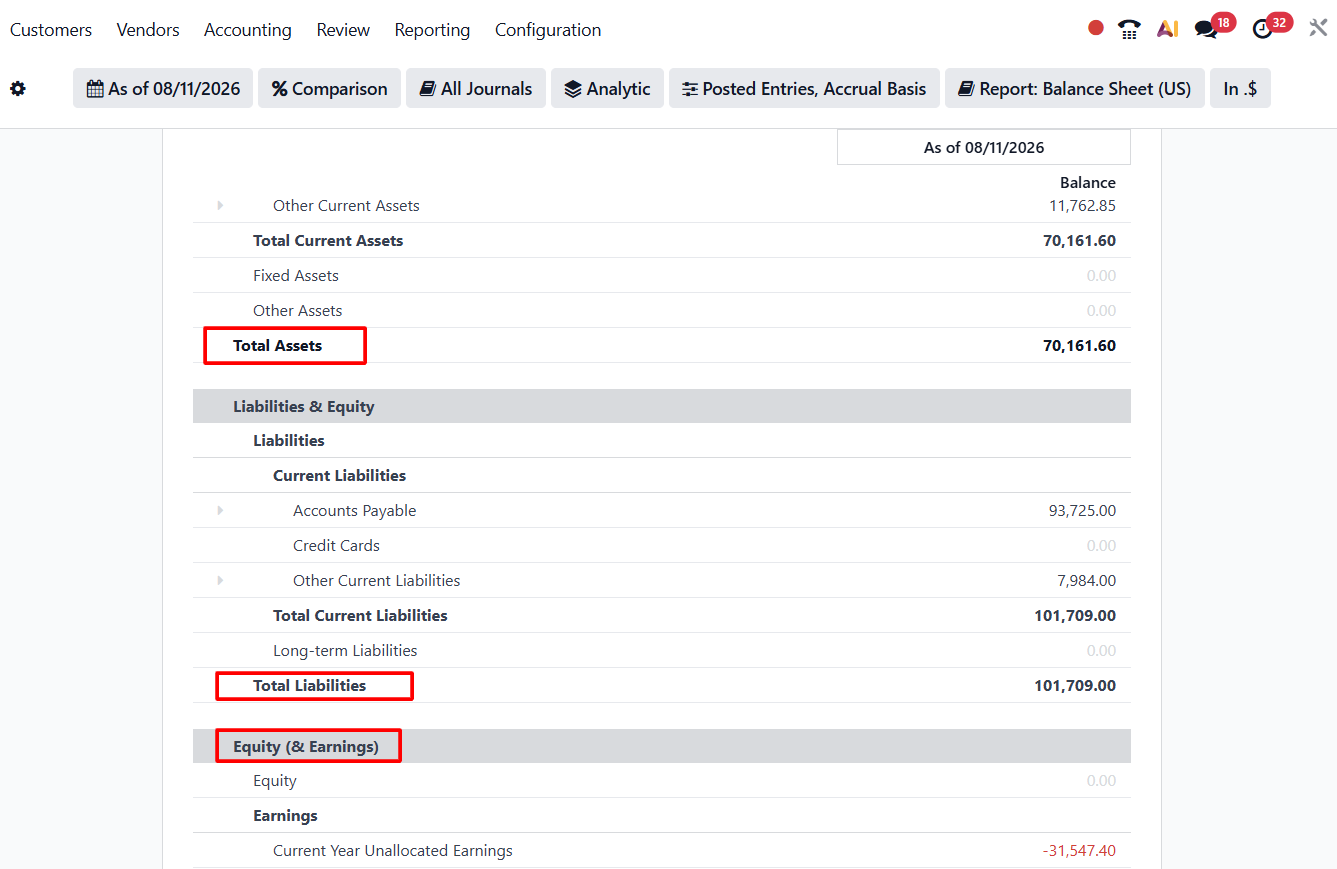
Current Year Earnings represents the financial result generated during the current reporting period. It is closely connected with the Profit & Loss result rather than being a normal account for routine sales or expense postings.
Odoo calculates current-year earnings in real time. The Profit & Loss balance is automatically reflected on the Balance Sheet, so Odoo does not require a traditional year-end rollover journal simply to move the current year’s result into the Balance Sheet.
5. Income Accounts in Odoo 19
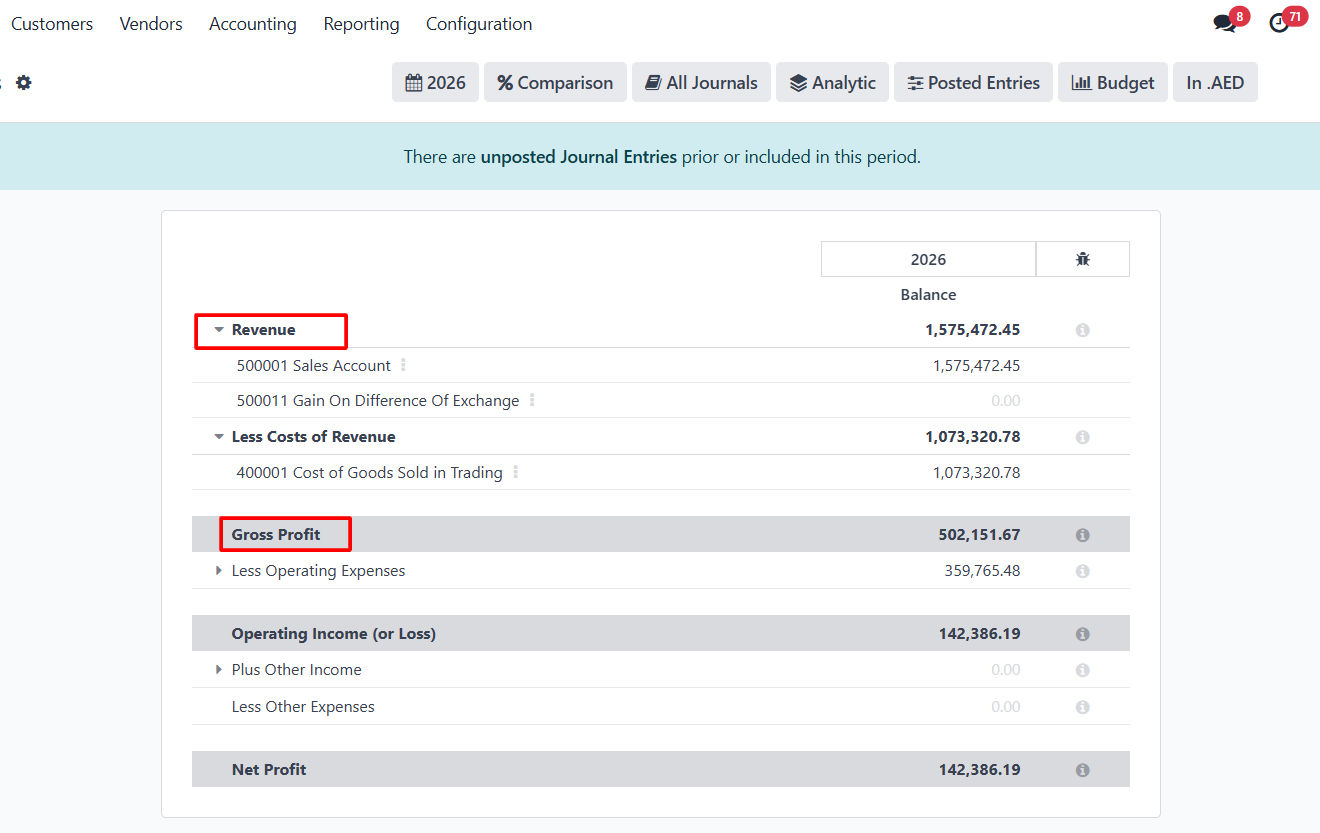
Income accounts record amounts earned by the business. They are Profit & Loss accounts and normally increase with a credit. Odoo separates normal operating Income from Other Income so businesses can distinguish core revenue from income that does not belong to the main operating activity.
5.1 Income
The Income type is normally used for revenue earned from the company’s main products or services. Examples include product sales, consulting revenue, subscription revenue, or service income.
|
Account |
Debit |
Credit |
|
Accounts Receivable |
$5,000 |
|
|
Service Revenue |
$5,000 |
When the customer invoice is posted, the receivable increases with a debit and the Income account increases with a credit. The Income balance then contributes to the company’s Profit & Loss result.
5.2 Other Income
Other Income is used when the company needs to separate incidental or non-core income from normal operating revenue. Examples may include certain interest income, cash overages, or other gains that the company’s accounting policy does not treat as core sales revenue.
Odoo itself uses an Income or Other Income type account as the Profit Account for a Cash Journal when the ending cash balance is higher than expected. The exact classification between Income and Other Income should follow the company’s accounting policy and localisation.
6. Income vs Other Income
|
Odoo type |
When to use it |
Typical examples |
|
Income |
Revenue from normal or core business operations. |
Product sales, service revenue, consulting income, recurring subscription revenue. |
|
Other Income |
Income that the company reports separately from its normal operating revenue. |
Certain interest income, cash overages, or other incidental gains depending on accounting policy. |
7. A Connected Example: How These Account Types Work Together
Consider a packaging company that completes several common transactions during the month. The examples below show how Liability, Equity, and Income accounts work together with their corresponding debit entries in a complete journal entry.
|
Business event |
Debit side |
Credit side |
Main reporting impact |
|
Owner invests $20,000 |
Bank - Debit $20,000 |
Equity - Credit $20,000 |
Balance Sheet |
|
Company receives a $1,000 vendor bill |
Expense - Debit $1,000 |
Payable - Credit $1,000 |
Balance Sheet + Profit & Loss + Aged Payable |
|
Company takes a $30,000 long-term loan |
Bank - Debit $30,000 |
Non-current Liability - Credit $30,000 |
Balance Sheet |
|
Company posts a $5,000 customer invoice |
Receivable - Debit $5,000 |
Income - Credit $5,000 |
Profit & Loss + Balance Sheet |
The examples show why the Chart of Accounts must be structured correctly. A transaction may contain both Balance Sheet and Profit & Loss accounts, but each account type has a specific role and reporting destination.
Related Guide
Chart of Accounts in Odoo 19: Asset and Expense Accounts
For the debit-nature side of the Chart of Accounts, see our guide to Asset and Expense accounts. It explains how these account types behave, how prepayments and depreciation are treated, and how their balances flow into the Balance Sheet and Profit & Loss report.